Dermal fillers sit at the intersection of artistry and pharmacology, where millimeters matter and product choice determines not just a look, but how it evolves over months and years. As a practitioner, I often tell patients the needle is the least interesting part of dermal filler treatment. The real work happens in consultation, when we match anatomy, goals, lifestyle, and risk tolerance with a specific material and technique. Hyaluronic acid, calcium hydroxylapatite, poly-L-lactic acid, and polymethyl methacrylate are the main categories of injectable dermal fillers in use today. They sound technical, but they behave quite differently in skin and soft tissue. Understanding the trade-offs helps you have a better conversation with your dermal filler provider and make decisions that age well.
What fillers actually do inside your face
Injectable dermal fillers restore volume, contour features, and soften lines by occupying space and, in some cases, encouraging your body to make more collagen. They are not all the same. Some are true space-occupiers that deliver shape immediately and can be reversed if needed. Others act like catalysts, nudging your fibroblasts to build a stronger matrix over weeks. Longevity ranges from six months to five years depending on the material, your metabolism, injection depth, and the area treated. The goal is not to chase a number on a syringe, but to restore balance so light reflects more gracefully across the face.
Fillers are placed into specific planes: superficial dermis for fine lines, deep dermis for etched wrinkles, subcutaneous fat for volume restoration, and sometimes supraperiosteal for structural support along the cheek, chin, or jawline. Correct plane selection matters as much as product choice. A hyaluronic acid gel that works beautifully in the lips may look puffy under the eyes, while a firmer gel designed for the jawline would feel too stiff in the vermilion border.
Hyaluronic acid fillers: reversible, versatile, and the workhorse
Hyaluronic acid fillers dominate because they mesh with the body’s own HA, which binds water and gives skin its spring. Manufacturers cross-link HA chains to create gels with different thicknesses, lift capacities, and cohesivity. In practice, that means we can choose a soft, stretchy gel for lip fillers, a balanced gel for nasolabial fold fillers or marionette line fillers, and a sturdy gel for cheek fillers, chin fillers, and jawline fillers.
The advantages are practical. HA fillers are immediate, so you see most of the result right away, and they are reversible with hyaluronidase if we need to adjust shape or respond to a safety issue. The safety profile is excellent in trained hands, and the range of HA products allows tailored solutions for facial dermal fillers across almost every zone.
Longevity varies by product and placement. Lips turn over quickly, so expect six to nine months. Cheeks and chin often last nine to eighteen months. Under eye fillers in the tear trough can last a year or more, though patient selection is key. Overfilling or using a hydrophilic gel in the thin lower lid skin can create prolonged swelling or Tyndall effect, that faint bluish hue when a gel sits too close to the surface. In these cases, less is more, and sometimes a microcannula and a low-swelling HA provide the most natural looking dermal fillers.
For dynamic areas like smile lines, a moderately elastic HA handles facial motion without forming lumps. For structural areas like the lateral cheek or jawline, a higher G-prime HA provides lift and shape. These are not marketing terms; they refer to You can find out more the gel’s rheology and how it behaves under compression and stretch. A skilled dermal filler specialist will discuss why a specific HA formulation fits your goals and show examples of dermal filler before after images that match your anatomy and age.
If you are new to cosmetic fillers, HA is usually the first step. It lets you test drive changes with a safety net, and it fits almost any aesthetic filler injection plan. Those who appreciate precision and reversibility, particularly in the lips or tear trough, tend to prefer HA.
Calcium hydroxylapatite: structure and subtle collagen
Calcium hydroxylapatite, often abbreviated CaHA, contains microscopic calcium phosphate spheres suspended in a gel. Think of it as a hybrid. The carrier gel provides immediate volume, while the CaHA particles stimulate collagen formation over the next few months. As the gel resorbs, your own tissue replaces it, which creates a firm, natural feel.
CaHA excels in the midface, along the jawline, and in marionette and nasolabial regions when someone needs a little more structural support than HA can comfortably provide in the same volume. It is also helpful for men seeking sharper angles, as the lift-to-volume ratio is high. I reach for CaHA in post-weight-loss faces with generalized laxity, where the goal is to improve scaffolding without adding puffiness. It is not typically used in the lips or tear trough due to particle size and risk of visibility.
Longevity sits around 12 to 18 months, sometimes longer in low-movement areas. Collagen stimulation improves skin firmness, which patients notice as a more “held” look rather than just fullness. CaHA can be hyper-diluted with saline or lidocaine to work more like a skin rejuvenation filler for crepey skin on the neck or lower face, where it boosts quality rather than volume.
The trade-off is reversibility. CaHA is not dissolvable like HA. If a touch-up is required, we blend or balance with small amounts of HA, or allow time for tissue remodeling. For this reason, injector skill and anatomy mapping are critical. A dermal filler provider using CaHA should be comfortable with cannula work, layered placement, and conservative dosing during your dermal filler procedure.
Poly-L-lactic acid: slow-build collagen for global thinning
Poly-L-lactic acid, or PLLA, is not a traditional filler in the sense of a gel that sits where it is placed. It is a biostimulator. After reconstitution and injection, PLLA particles incite controlled collagen production over several weeks. The initial swelling you see right after filler injections is largely fluid, which fades within days. The true result appears gradually as your body lays down its own matrix.
I recommend PLLA for diffuse volume loss, especially in the temples, lateral face, and preauricular areas. It also suits patients who want a gradual, discreet refresh without the instant fullness of conventional skin fillers. Athletes and those with high metabolisms, who burn through HA more quickly, often appreciate the longevity and lightweight feel.
Treatment unfolds over sessions, typically two to four visits spaced four to eight weeks apart. Each appointment adds to the scaffold. Final results last two years or more, with maintenance touch-ups every 12 to 24 months depending on goals. Because PLLA works through collagen synthesis, you cannot simply dissolve it if you change your mind. Technique, dilution, and massage matter to avoid nodules. Providers instruct patients to massage the treated areas a few times daily for several days, a simple step that helps distribute particles evenly.
PLLA is not for fine-line detail or crisp contouring, and it is not suited for lips or under eyes. It shines when the priority is facial volume restoration that feels light and looks like you, just rested.
PMMA: semi-permanent structure and narrow indications
Polymethyl methacrylate, or PMMA, is the most durable of the injectable fillers discussed here. Suspended in a collagen gel carrier, PMMA microspheres act as permanent scaffolding while your tissue grows around them. The appeal is longevity, measured in years rather than months. Some patients, particularly those with stable, etched nasolabial folds or atrophic acne scars, can benefit from PMMA’s staying power.
The permanence cuts both ways. PMMA is unforgiving of poor planning or suboptimal placement. You want a dermal filler clinic and dermal filler specialist with deep experience in facial fillers before considering PMMA. Because correction options are limited, we tend to test treatment areas with HA first to confirm volume, shape, and response. If the test drive looks and feels right over several months, PMMA may be a strategic next step for long lasting dermal fillers in very specific zones. It is not appropriate for the lips, tear troughs, or areas with thin skin where surface irregularities show.
In my practice, PMMA sits in a small toolkit drawer for select cases: severe, stubborn folds that repeatedly collapse, or focal scars that have resisted subcision and other treatments. It is not a first-line option for general facial rejuvenation. Most patients are better served by reversible or biostimulatory products that can adapt with age.
Zones of the face and how material choice shifts
Good outcomes require matching filler mechanics to the unique behavior of each zone.
Lips prefer an HA with balance, softness, and stretch. Lip fillers should support shape without rigid edges. Overfilling the white roll or using overly firm gels creates a shelf. Small volumes across multiple sessions often deliver the most natural result, and the cost per session can be lower than trying to do everything at once.
Tear troughs are a yes for carefully selected HA in patients with adequate skin quality, not much edema, and minimal herniated fat. Others do better with cheek support that reduces the trough’s shadow indirectly. The safest tear trough fillers are placed low and deep with conservative amounts and are often accompanied by skincare that addresses pigment and texture.
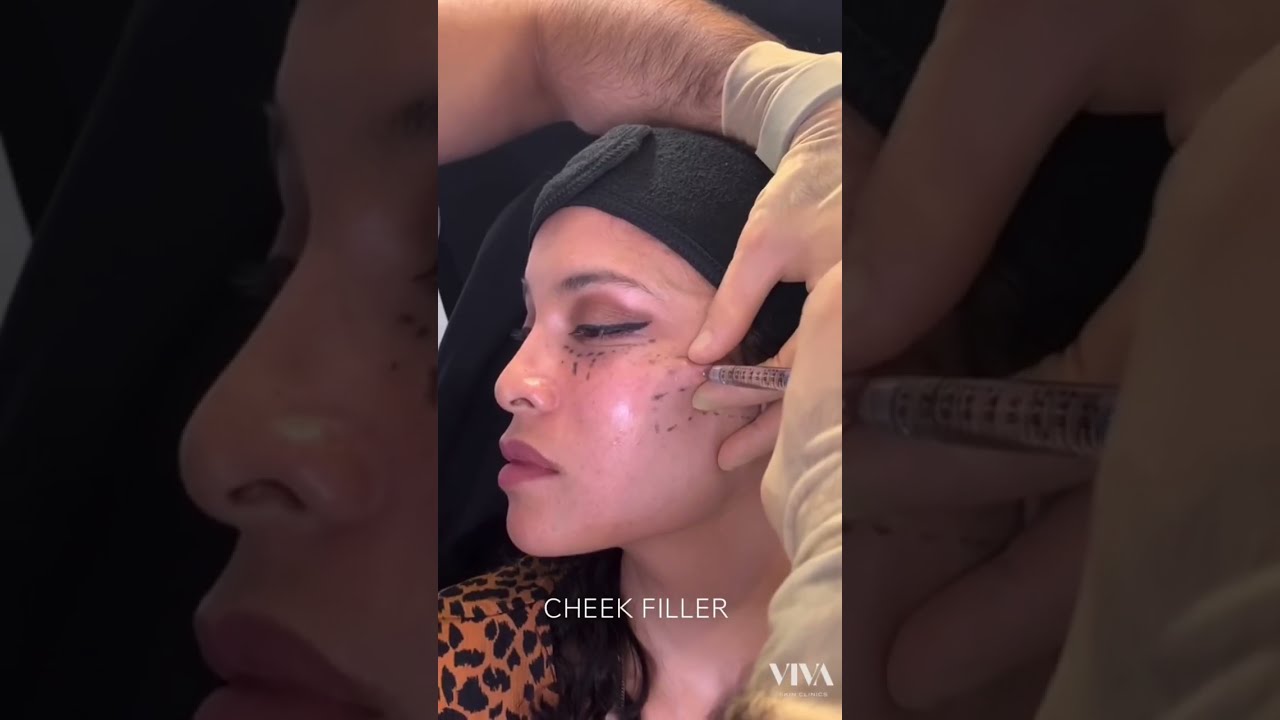
Cheeks benefit from structured HA or CaHA when lift is the goal, and from PLLA for lateral thinning or hollowing in athletic patients. Cheek filler injections that chase the malar highlight without supporting the lateral cheek can look artificial when you smile. Good cheek work respects the ogee curve, the gentle S-shape of the midface.
Jawline and chin respond well to firmer HA or CaHA. Chin fillers shape projection and length, which changes the balance between nose, lips, and neck. Jawline fillers create definition along the mandibular angle, helpful for both men and women. In heavier lower faces, injectors often combine small amounts of neuromodulator in the masseter with jawline filler for a cleaner edge.
Nasolabial fold fillers and marionette line fillers often look best when the midface is supported first. Folds are partly a symptom of cheek descent and volume loss. When you underpin the cheek, the fold softens before we place a single drop in the line itself. This approach reduces the need for large volumes in high-motion areas.
Under-eye hollows, smile lines, and perioral fine lines each demand rheology matched to movement. For static lip lines, microdroplets of a supple HA layered superficially can smooth without bulk.
Safety is not negotiable
All dermal filler injections carry risk. The most common side effects are swelling, bruising, and tenderness, which resolve within days. The rare but serious risk is vascular occlusion, where filler enters or compresses a blood vessel. Signs include blanching, pain out of proportion, and livedo reticularis. This is why you want a medical aesthetic provider who understands facial vascular anatomy, carries hyaluronidase, and has a plan for emergencies.
Filler migration is less common than social media suggests. What patients call migration is often overfilling, poor rheology selection, or age-related tissue changes revealing product that was once well hidden. Choosing conservative volumes and the right gel, along with follow-up visits to refine, keeps results tidy.
Biofilm or delayed inflammatory reactions can occur months later. These are more likely after infections or dental work in the same area. Your dermal filler consultation should include a recent health history, antibiotic allergies, and any plans for dental procedures. We sometimes pause injections two weeks before and after dental work to reduce risk.
Hyaluronic acid remains the safest starting point due to reversibility. CaHA and PLLA require more planning and patient compliance, particularly with massage after PLLA. PMMA demands caution and precise indications.
How to approach consultation and planning
A solid dermal filler consultation sets the tone for safe, satisfying results. Bring photos from five to ten years ago. They reveal where you have genuinely lost volume versus where you never had it. Your dermal filler provider should perform a structured exam at rest and in expression, test skin quality, and palpate bone landmarks. Expect a discussion of alternatives, including energy devices, neuromodulators, or even surgery if your goals exceed what injectable fillers can deliver.
Budget honestly and plan for maintenance. The dermal filler cost for first-time structural work can be higher, then lower for upkeep. Cheeks and chin might require 1 to 3 syringes combined, while lips typically use 0.5 to 1 syringe per session. Prices vary by region and product, but most clinics quote per syringe for HA and CaHA, and per vial for PLLA. PMMA pricing is usually per syringe with an initial correction series. Ask about package pricing if your plan spans several visits. Cost transparency builds trust and helps you prioritize zones that will deliver the greatest improvement.
Realistic expectations matter. Fillers refine faces; they do not change bone or lift heavy skin when laxity is advanced. For someone with significant jowling, a small surgical lift might be more cost-effective than chasing definition with repeated filler injections.
Technique choices that shape outcomes
Cannula versus needle is not a binary debate. Both have roles. Cannulas reduce the risk of vessel puncture and often minimize bruising, especially along the jawline, nasolabial folds, and marionette area. Needles provide precision and are sometimes required in tight anatomical pockets or for microdroplet technique in etched lines. A seasoned cosmetic injection filler specialist switches tools to fit the plan, not the other way around.
Layering and sequencing matter. We typically correct from top to bottom and from deep to superficial. Structural pillars along the cheek and chin come first. Then we blend into the superficial fat and skin for smooth transitions. Patience between sessions lets swelling settle and allows honest assessment of where volume is still needed.
Small volumes in the right plane outperform large volumes in the wrong one. I would rather place 0.3 mL with intent than 1.0 mL scattered. The face appreciates restraint.
Comparing the four filler families at a glance
- HA fillers: Immediate, versatile, reversible, wide brand selection for cosmetic dermal fillers. Best for lips, tear troughs, fine-tuning across the face. Longevity roughly 6 to 18 months depending on area and product. Calcium hydroxylapatite: Strong lift and collagen support, not dissolvable. Great for cheeks, jawline, folds in thicker skin. Longevity around 12 to 18 months. PLLA: Collagen stimulator with gradual results. Ideal for diffuse volume loss and skin quality. Requires multiple sessions and massage. Results often last 2 years or more. PMMA: Semi-permanent scaffold suited to select cases like deep folds or scars. Narrow indications and high stakes. Longevity measured in years.
Maintenance and what longevity really means
Dermal filler longevity is not a stopwatch. Movement, metabolism, sun exposure, exercise volume, and skin thickness all influence how long results hold. Also, your eye adapts. At six months, you may not have lost much volume, but you have gotten used to the improvement and want a small refresh. That is normal.
A practical maintenance rhythm: lips every 6 to 12 months, tear troughs every 12 to 24 months, cheeks and chin every 12 to 18 months, jawline every 12 to 18 months, CaHA or HA in folds annually as needed, PLLA touch-ups every 12 to 24 months once you reach your baseline. Skincare that supports collagen, such as retinoids and daily sunscreen, extends benefits. Weight stability helps. Big swings in weight change fat compartments and can age a filler result faster than time alone.
For those who prefer non surgical facial fillers to surgery, consistency is your friend. Smaller, periodic treatments maintain facial harmony better than long gaps followed by large-volume corrections.
Who is a strong candidate for each type
People who want precision, reversibility, and control over shape do well with HA. It suits first-timers, perfectionists, and areas demanding softness like the lips and under eyes. It also fits those who value natural looking dermal fillers with the option to tweak.
Those seeking structure without heaviness, particularly in the midface or jawline, benefit from CaHA. It appeals to patients who like a firmer feel and a touch of collagen improvement.
Patients with global deflation, especially slim or athletic individuals, often shine with PLLA. They usually prefer gradual change, value longevity, and can commit to a series of sessions and massage.
A small group with persistent folds or select scars may consider PMMA, typically after a successful trial with HA. These patients accept the permanence and have stable weight and health.
Medical history guides product choice too. Autoimmune conditions, bleeding disorders, or a history of keloids warrant a careful risk assessment. Active infections, pregnancy, or breastfeeding are reasons to wait. Your dermal filler specialist should take a thorough history and, if needed, coordinate with your primary care physician.
What a well-run appointment looks like
A reliable dermal filler clinic follows clean, consistent protocols. You should see your provider open sterile needles or cannulas, clean your skin thoroughly, and mark landmarks. They will discuss the plan before the first injection and check symmetry during the session. Expect real-time feedback, a mirror check at strategic points, and clear post-care instructions. Bruising is common, especially if you take fish oil, turmeric, or aspirin. Many clinics provide arnica or recommend cold compresses. Avoid vigorous exercise and dental appointments for at least 24 to 48 hours after most injectable filler treatments. For PLLA, you will be taught the five-by-five massage rule, typically five minutes, five times a day, for five days.
Costs should be confirmed before treatment starts. If your budget is fixed, say so. A thoughtful provider will prioritize high-impact zones and plan a staged approach. Transparent dermal filler price discussions include dose ranges, possible touch-ups, and how long results typically last in your age group.
When fillers are not the answer
Some concerns do not respond well to filler therapy alone. Significant skin laxity, heavy jowls, or a deep, under-projected chin may need surgical or device-based support. Under eye bags caused by large fat pads will not vanish with dermal volumizing fillers and can look worse if overfilled. Pigment around the eyes is not solved by a filler injection; it needs skincare, lasers, or peels. Melting pockets of fat with injectables has limits too, especially in the submental area if skin quality is poor.
Part of professional dermal fillers practice is knowing when to say no, or not yet. A candid conversation saves money and frustration and often leads to a better combination plan.
Putting it all together
Choosing between hyaluronic acid, calcium hydroxylapatite, PLLA, and PMMA is less about brand loyalty and more about matching physics to physiology. HA remains the backbone of aesthetic filler injections due to versatility and reversibility. CaHA adds lift and quiet collagen where structure is needed. PLLA rebuilds the scaffold slowly for those with global thinning. PMMA sits on the periphery as a durable tool for select indications.
If you are starting your journey with injectable facial fillers, book a detailed facial filler consultation. Bring your questions, old photos, and an open mind. Ask your provider how they choose products for each zone, how they handle complications, and what maintenance looks like. Look at dermal filler results in people who resemble you, not just celebrities or extreme transformations. Great work is often subtle. Friends say you look rested, not that they can see your filler.
Good outcomes stem from the right plan, careful technique, and respect for the way faces move and age. When those pieces align, dermal filler treatment becomes less about adding volume and more about restoring character, proportion, and ease.